
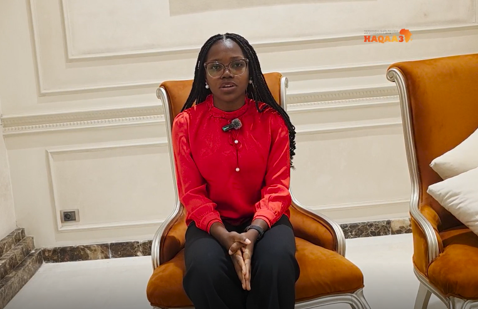
Author: Anuoluwapo Fakunmoju
Institution: Federal University of Agriculture, Abeokuta, Ogun state, Nigeria
Quality assurance in higher education is most effective when it reflects the perspectives of everyone it serves. While policies, standards and institutional processes provide the framework for quality, students offer insights grounded in their lived educational experiences. The Harmonisation of African Higher Education Quality Assurance and Accreditation Phase 3 (HAQAA3) External Agency Review process recognises this by placing students alongside seasoned quality assurance experts, ensuring that student voices contribute meaningfully to harmonising and strengthening higher education across Africa.
When I joined the HAQAA3 initiative as an African Student Representative after series of training and interviews, I knew I would have the opportunity to contribute to discussions about higher education quality across the continent. What I did not fully anticipate was how profoundly the experience would shape my understanding of quality assurance, strengthen my professional skills, and reinforce my belief that students are indispensable partners in improving higher education. For many years, students have often been regarded as beneficiaries of quality assurance rather than active contributors to it. HAQAA3 challenges this perception by recognising that students possess valuable insights into teaching, learning, student support services, governance, and institutional culture. The inclusion of trained student experts in external review panels by the initiative demonstrates that quality assurance in higher education is improving because it reflects the experiences of the stakeholders, in this context, students.
Serving as a student expert on an external review panel to NAQAAE, Egypt was both an honour and a significant responsibility. The review process required careful preparation, which includes studying self-evaluation reports, understanding the African Standards and Guidelines for Quality Assurance (ASG-QA), reviewing supporting evidence, and participating in discussions with experienced quality assurance professionals from different African countries. Although our backgrounds differed, we shared a common objective, which is conducting a fair, evidence-based, and constructive evaluation that would support the agency’s continued development and produce a positive ripple effect in the Egyptian higher institutions.
The collaborative nature of the review process was equally inspiring. Throughout the review, every panel member’s opinion was respected, regardless of seniority or professional background. Discussions were characterised by openness, mutual respect, and a shared commitment to evidence-based decision-making. HAQAA3 ensured that student experts were fully integrated into every stage of the review process, from document analysis and interviews to panel deliberations and the formulation of recommendations.
As a student expert, I often find myself examining how systems such as governance structures, regulatory frameworks, policies, and institutional processes translate into actual experiences for students. Questions relating to student engagement, communication, access to support services, transparency, feedback mechanisms, and the effectiveness of quality enhancement initiatives institutions became important areas where I needed to add my voice. This experience reinforced an important lesson: policies may appear comprehensive on paper, but their effectiveness is ultimately measured by how they are experienced by students. My role therefore provides an essential bridge between institutional intentions and lived reality.
Beyond the review itself, participating in HAQAA3 has contributed immensely to my personal and professional development. It has strengthened my analytical thinking, report writing, communication, teamwork, and intercultural collaboration skills. Working with reviewers from different countries and the review exercise in Egypt has exposed me to diverse higher education systems in the continent. The experience also deepened my appreciation of quality assurance as a continuous process rather than a periodic evaluation, knowing that effective quality assurance is not about identifying weaknesses alone. It is about recognising strengths, promoting good practices, encouraging innovation, and supporting institutions in their journey towards excellence.
From observation, a significant lesson I gained during my review exercise with NAQAAE, Egypt is that constructive reviews depend on openness, transparency, professionalism, and mutual respect between the panel experts and the stakeholders, because it makes the review process an opportunity to learn and make corrections rather than an exercise of inspection.
I also believe that HAQAA3 initiative is helping to harmonise, strengthen and broaden African higher education landscape by promoting shared standards through the African Standards and Guidelines for Quality Assurance (ASG-QA) within the cultural context of the agency and institution, facilitating students inclusion in decision making, encouraging collaboration among agencies and institutions, improving confidence in the quality of African higher education while supporting academic mobility and mutual recognition across the continent. To students who may be considering becoming quality assurance experts, I would strongly encourage them to embrace the opportunity. Participation requires commitment, preparation, and professionalism, but the rewards are substantial. Student experts gain invaluable knowledge about higher education governance while making meaningful contributions to improving educational quality for future generations of learners.
Similarly, I encourage higher education regulatory bodies and quality assurance agencies across Africa to participate actively in the HAQAA3 External Agency Reviews. The process provides an opportunity for reflection, benchmarking against continental standards, sharing good practices, and receiving constructive recommendations from experienced peers using the ASG-QA as a guide. More importantly, it demonstrates a commitment to continuous improvement and accountability.
Looking back, serving as a HAQAA3 student expert has been one of the most enriching experiences of my academic and professional journey. It has strengthened my conviction that students are not merely recipients of educational services, they are essential stakeholders whose voices contribute meaningfully to institutional improvement. As Africa continues to strengthen its higher education systems, student participation must remain an integral component of quality assurance. When students are genuinely engaged as partners, quality assurance becomes more inclusive, more responsive, and definitely more effective. HAQAA3 has shown that empowering student experts is an investment in building a stronger, more collaborative, and higher-quality African higher education system.